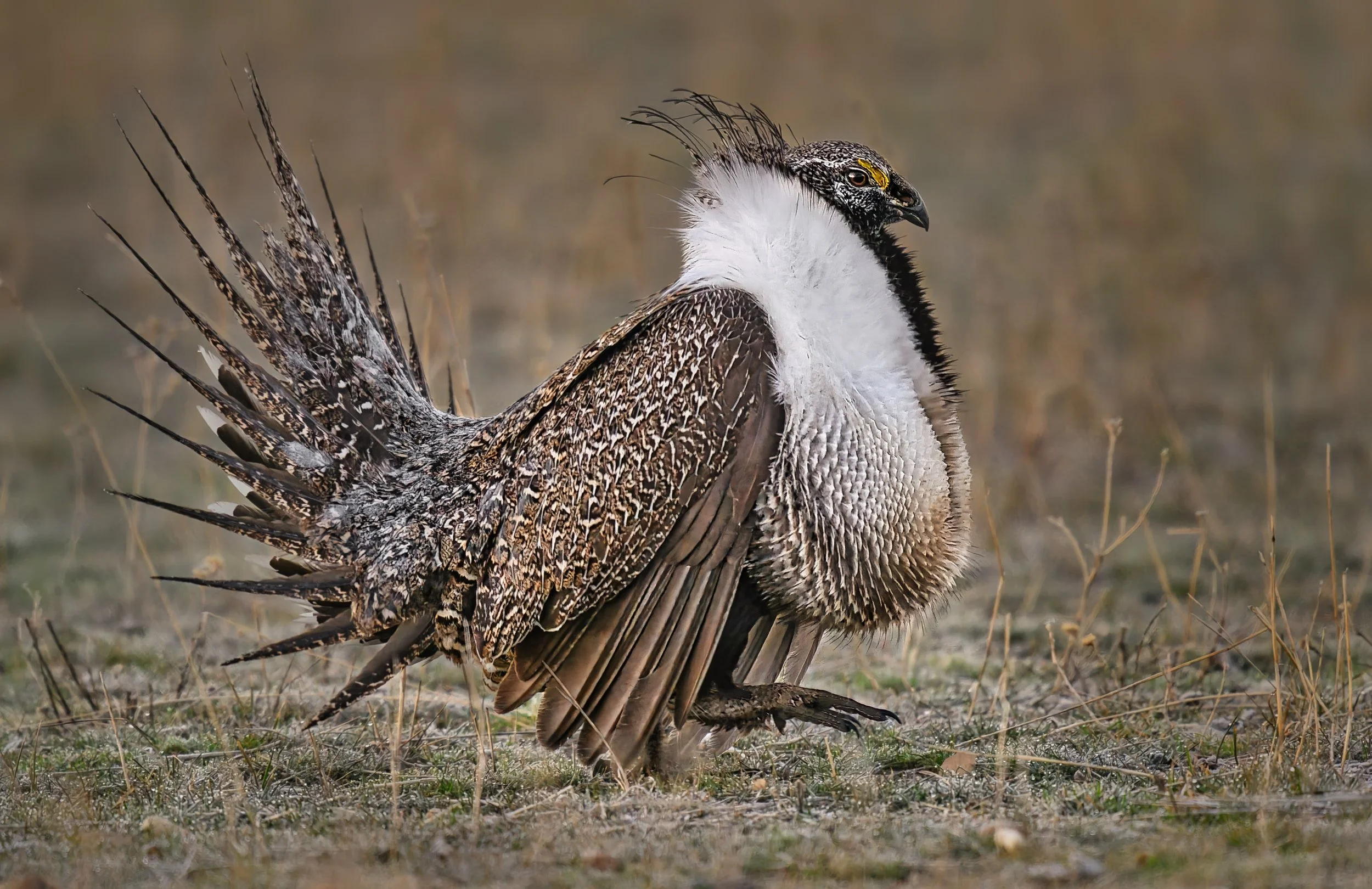
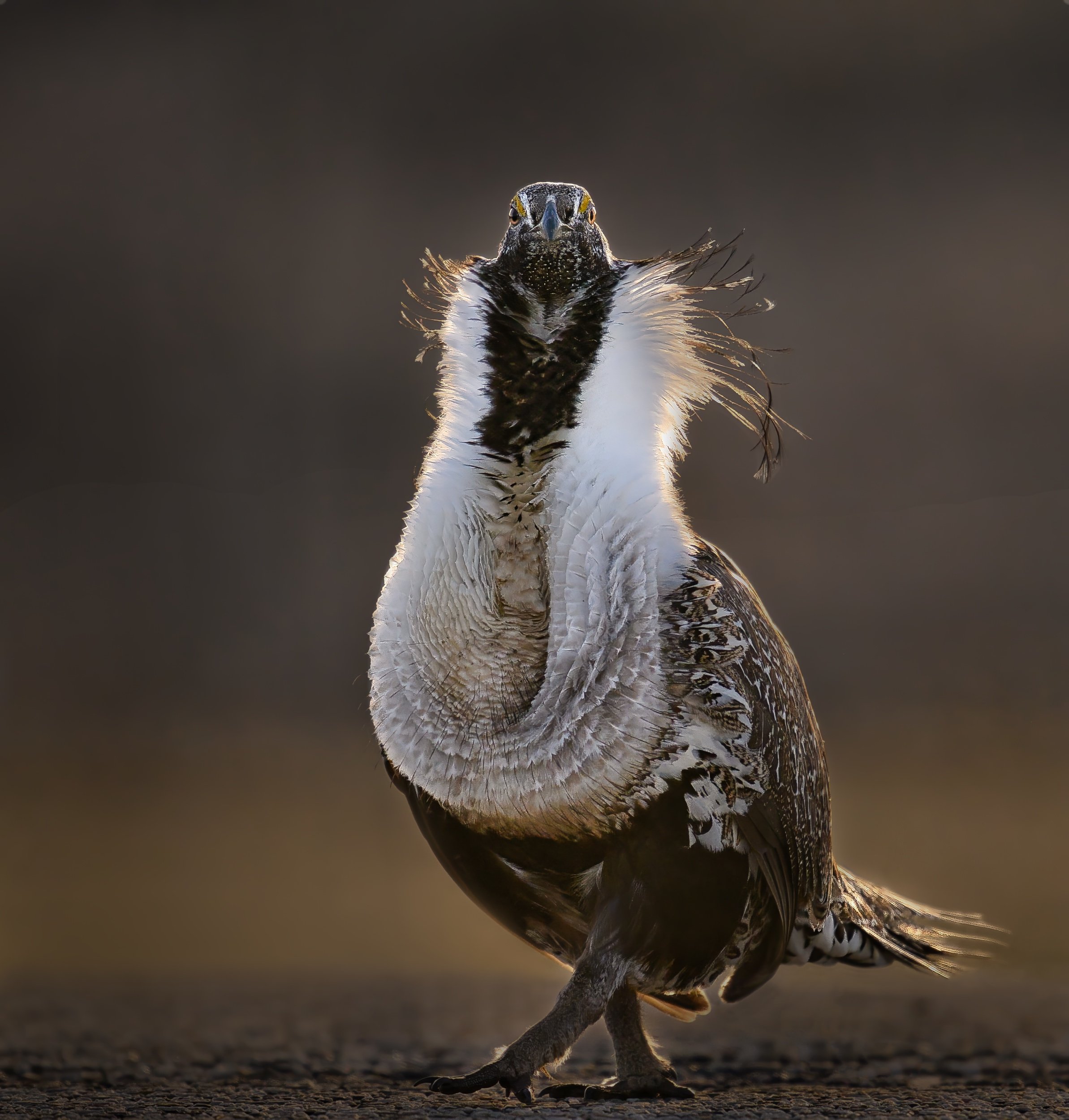
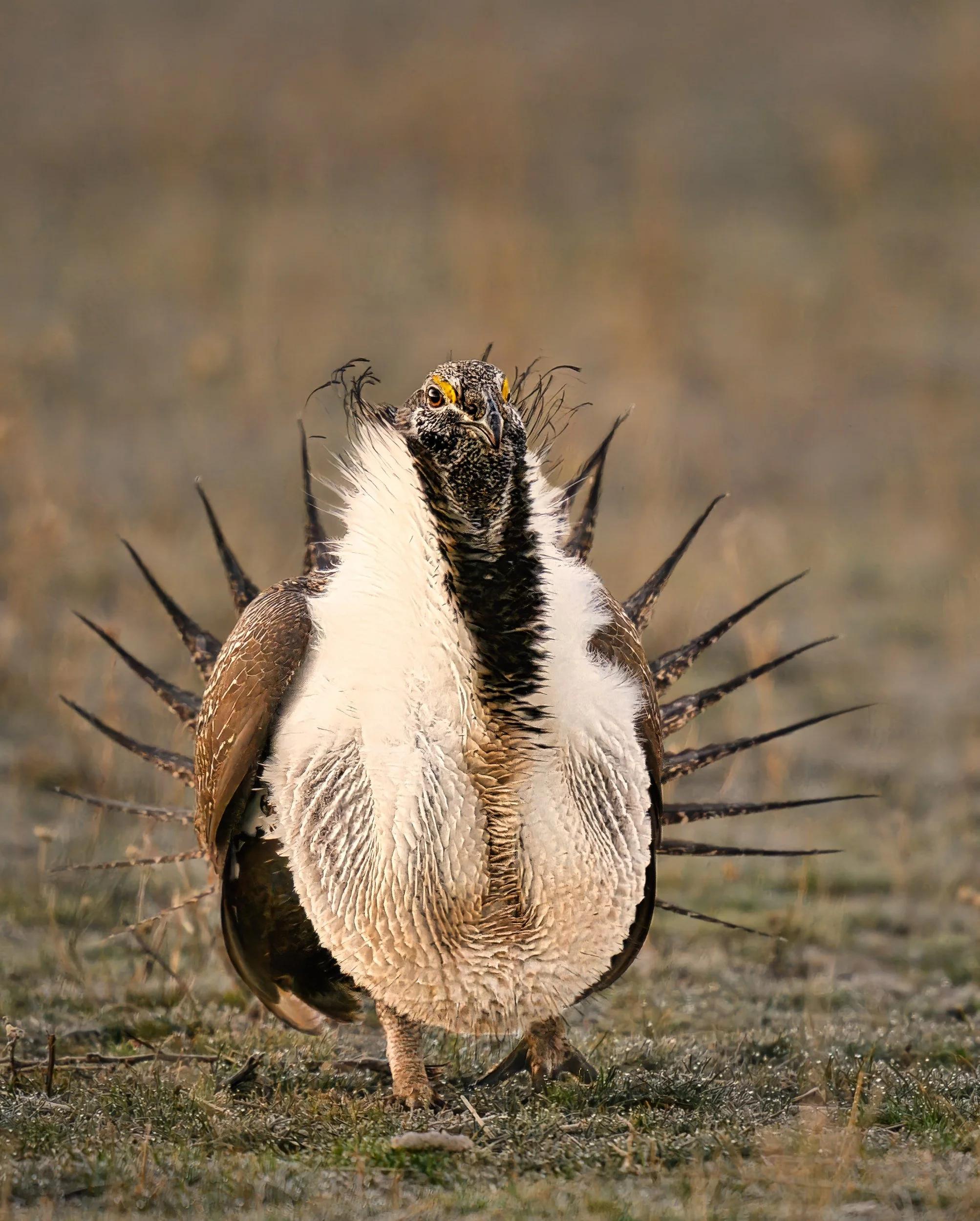
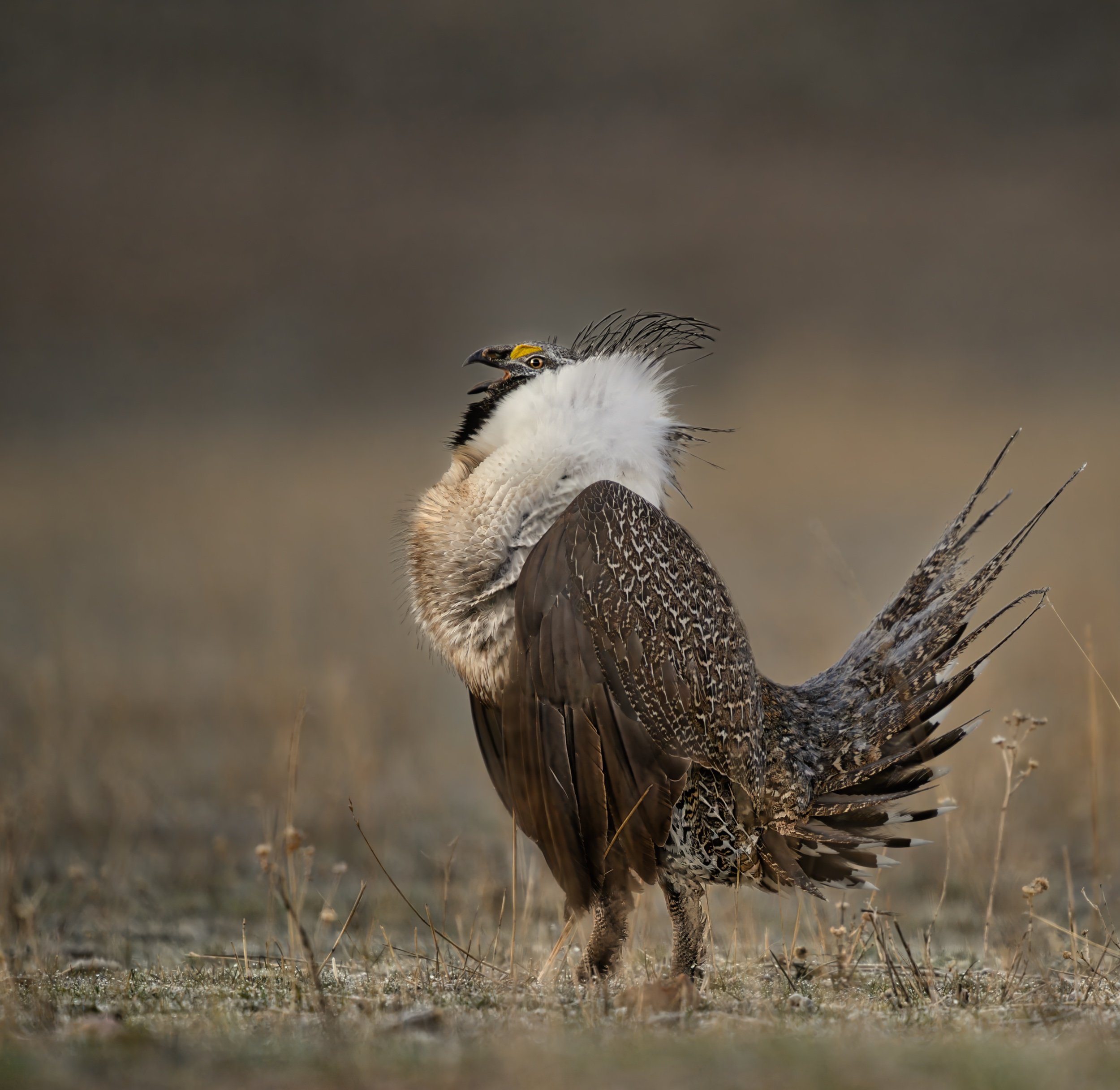
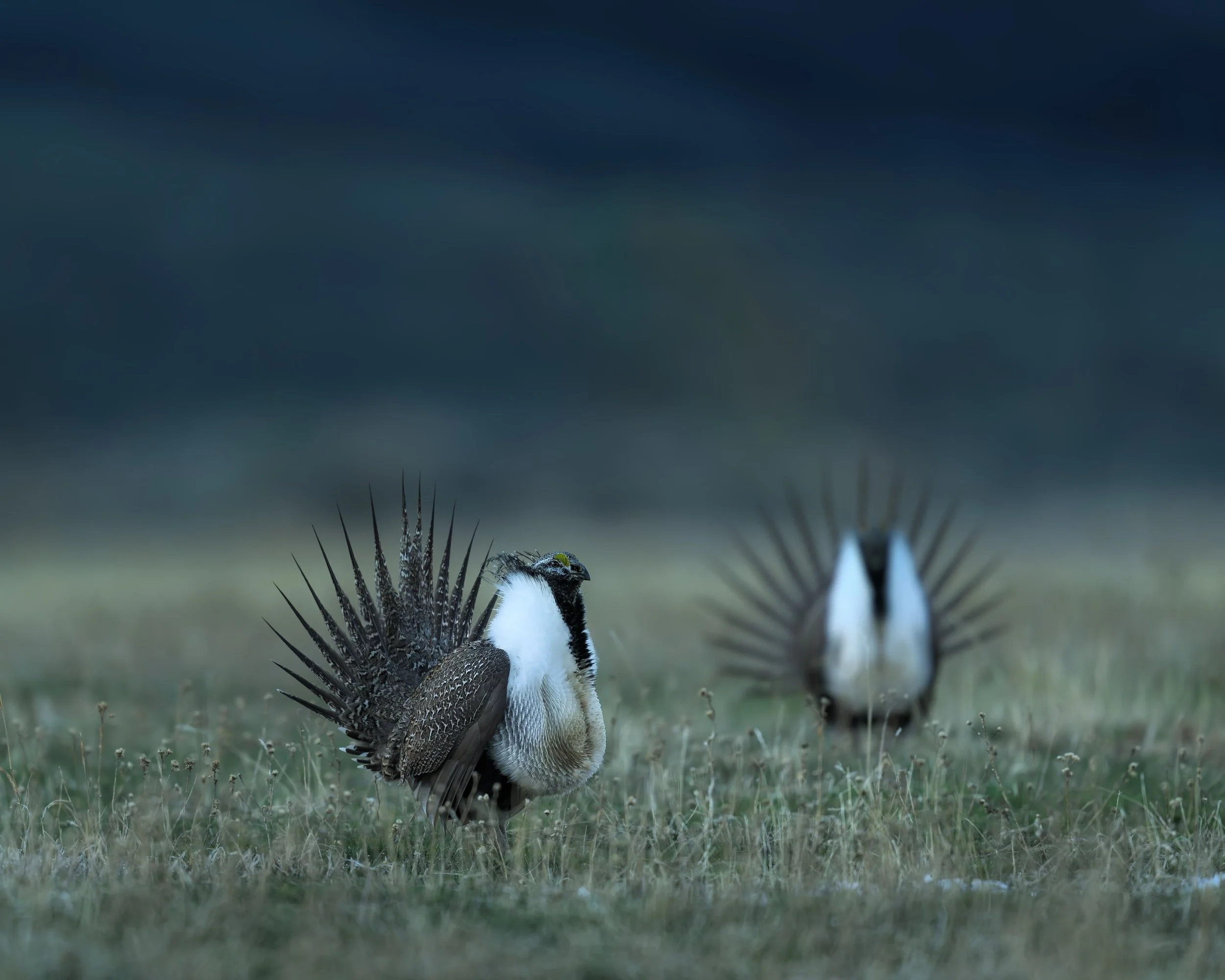
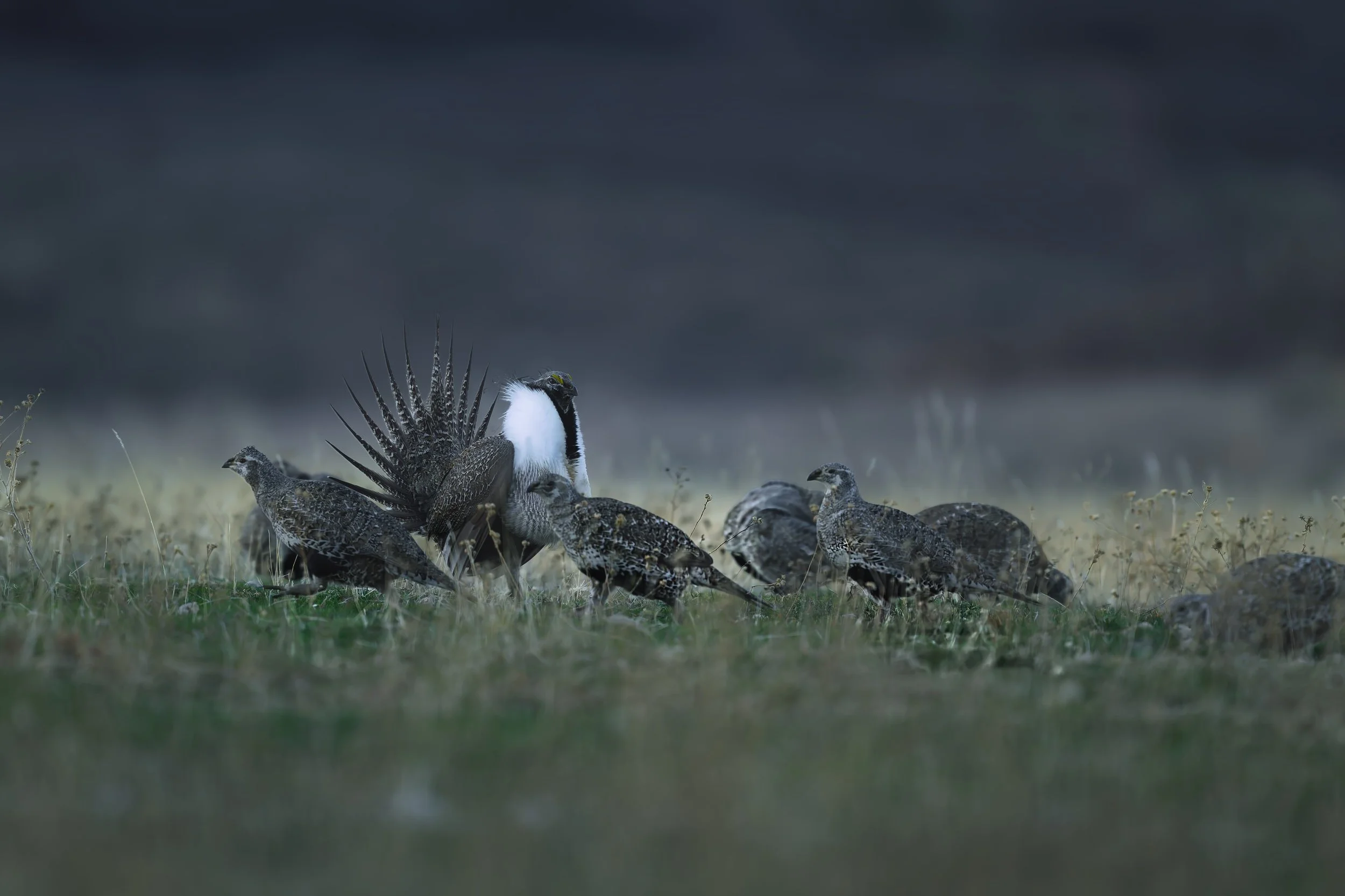
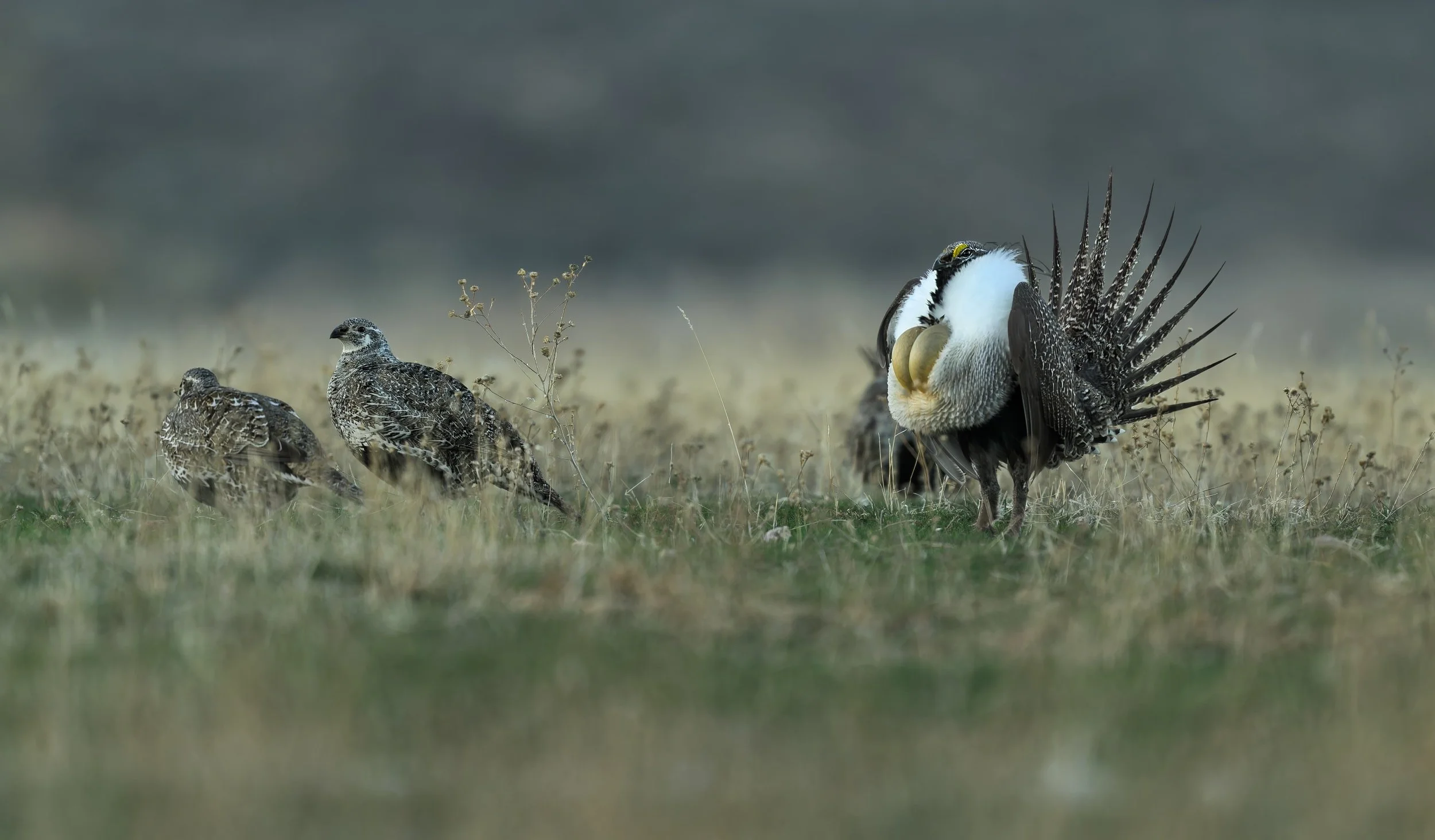
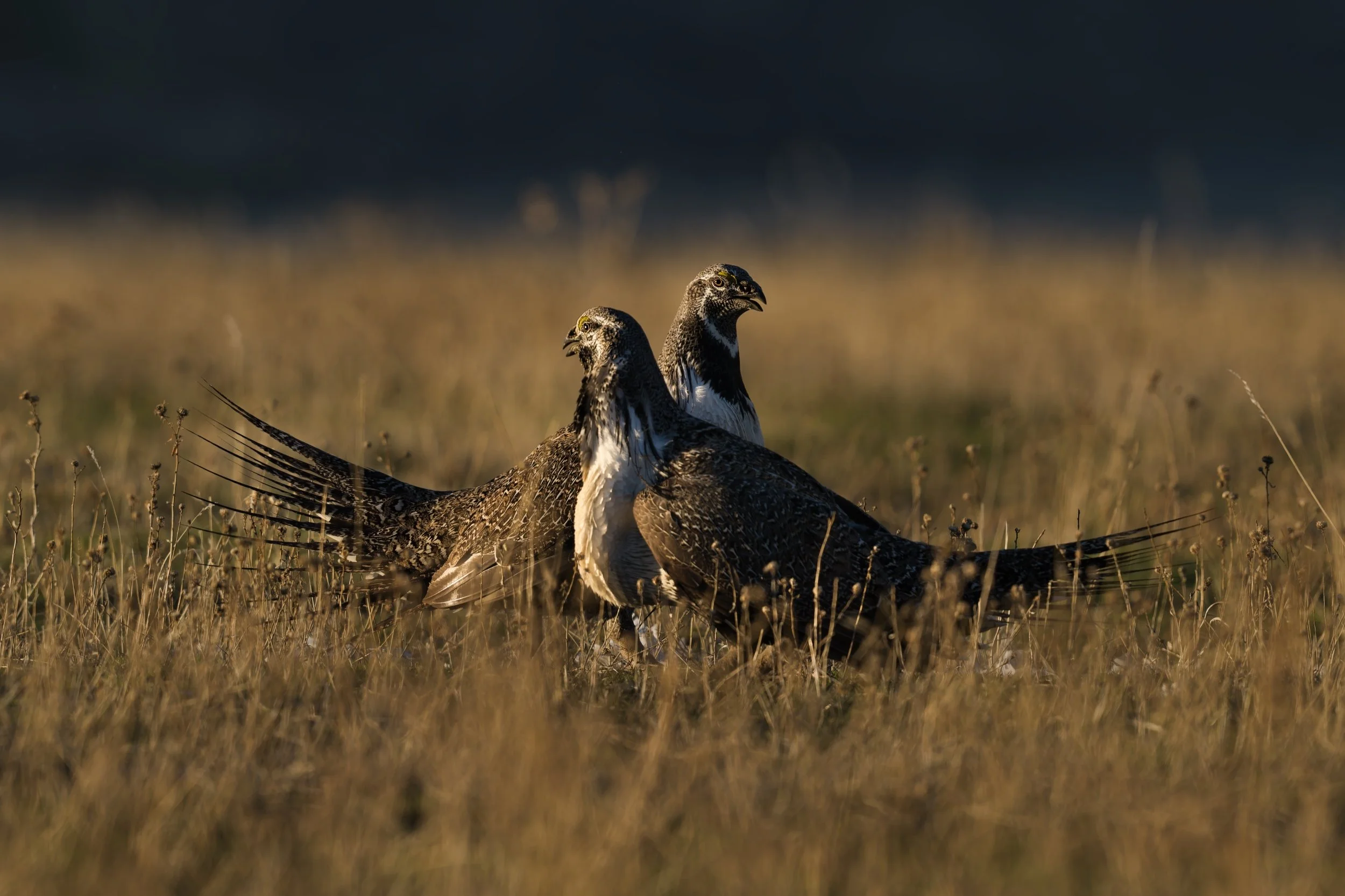
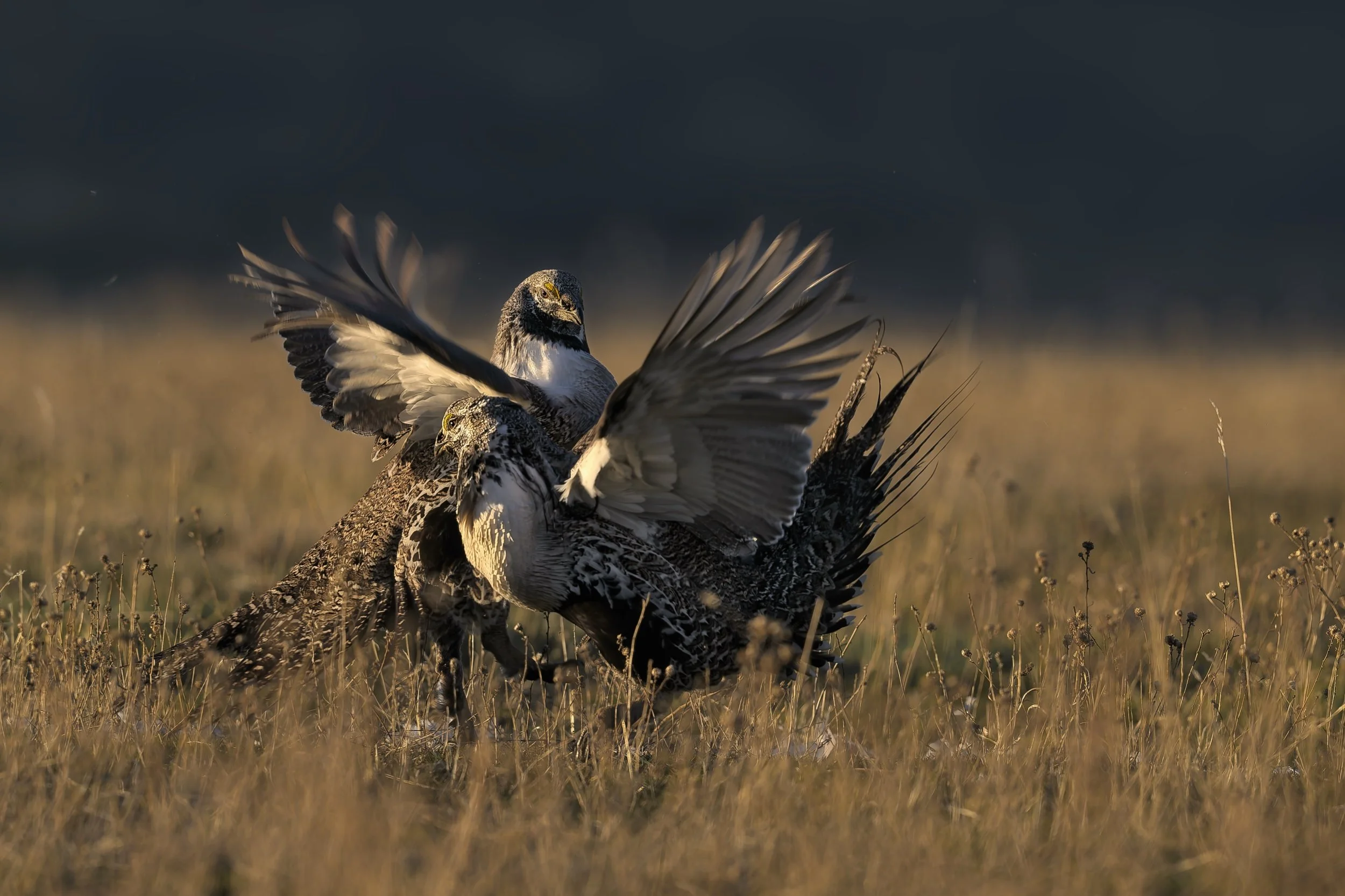
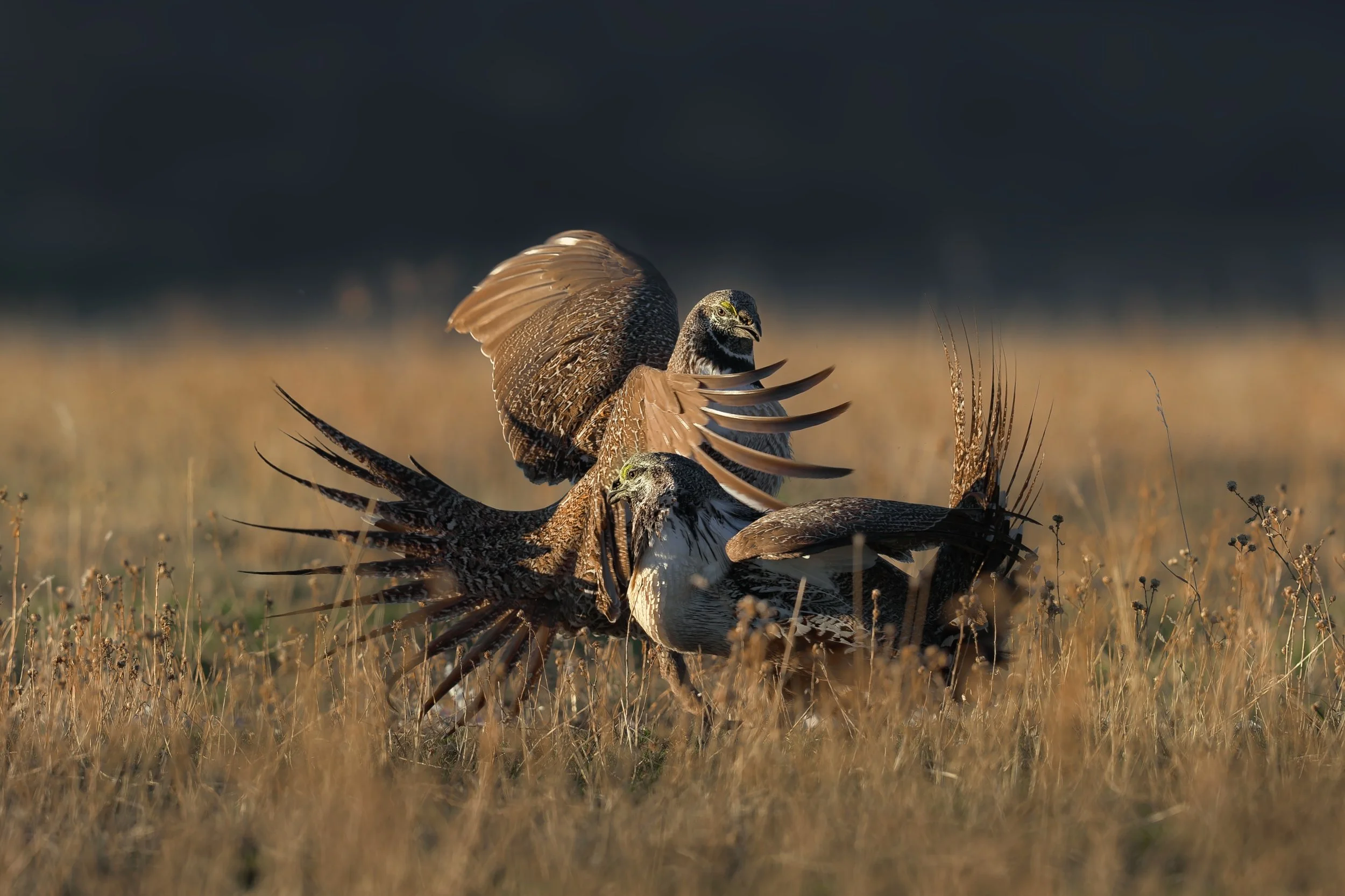
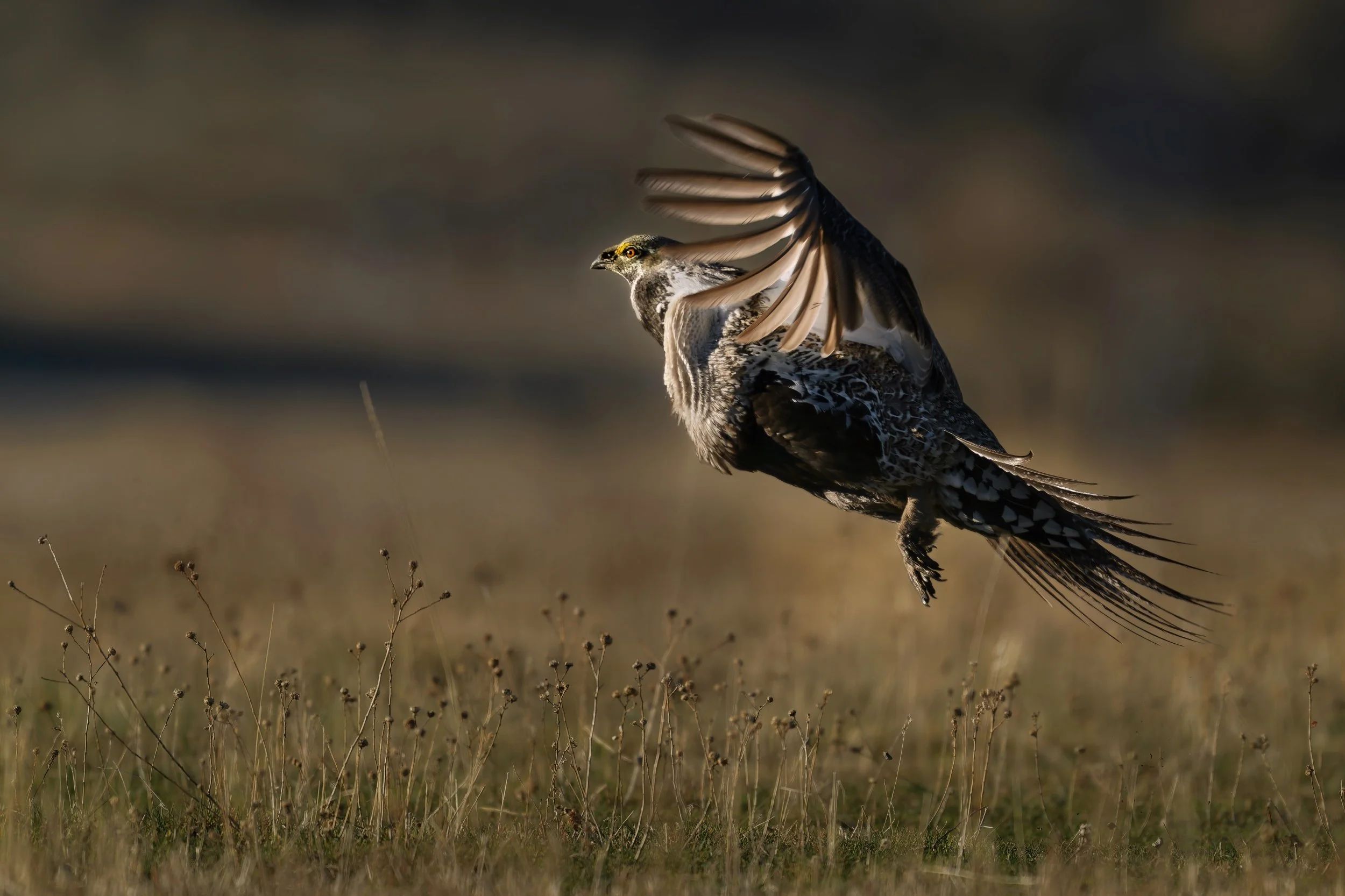
Greater Sage-Grouse are the largest native grouse in North America. As their name implies, these birds are intimately tied to the sagebrush ecosystems of the West, relying on the evergreen shrubs for both food and cover year-round. Their populations in recent years have declined precipitously due to habitat loss, fragmentation, and human development. Every spring, these birds congregate to mate in specific open clearings called leks. Many of these leks are hundreds of years old, traditionally used by generations of grouse who navigate back to the exact same spot by instinct.
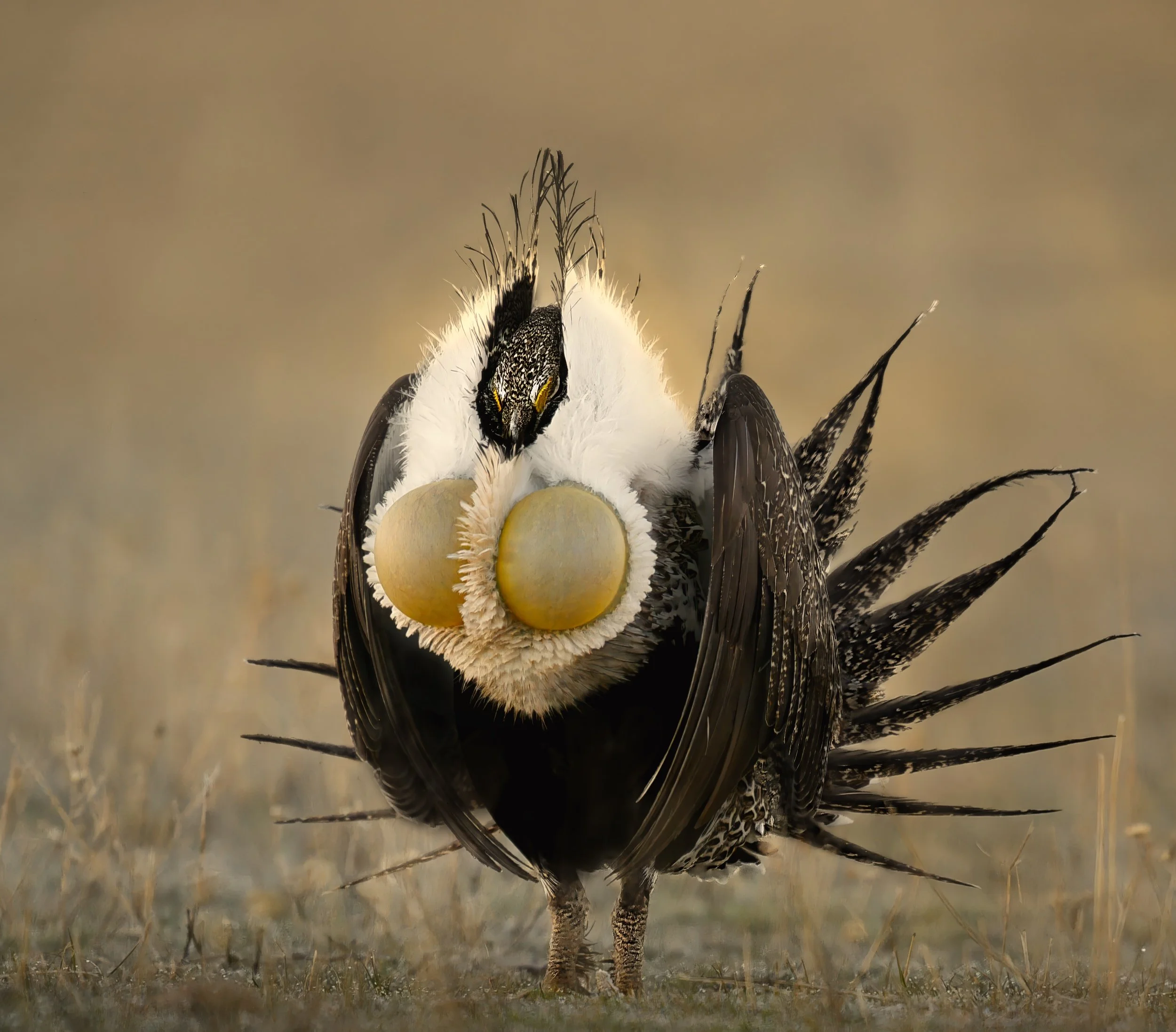
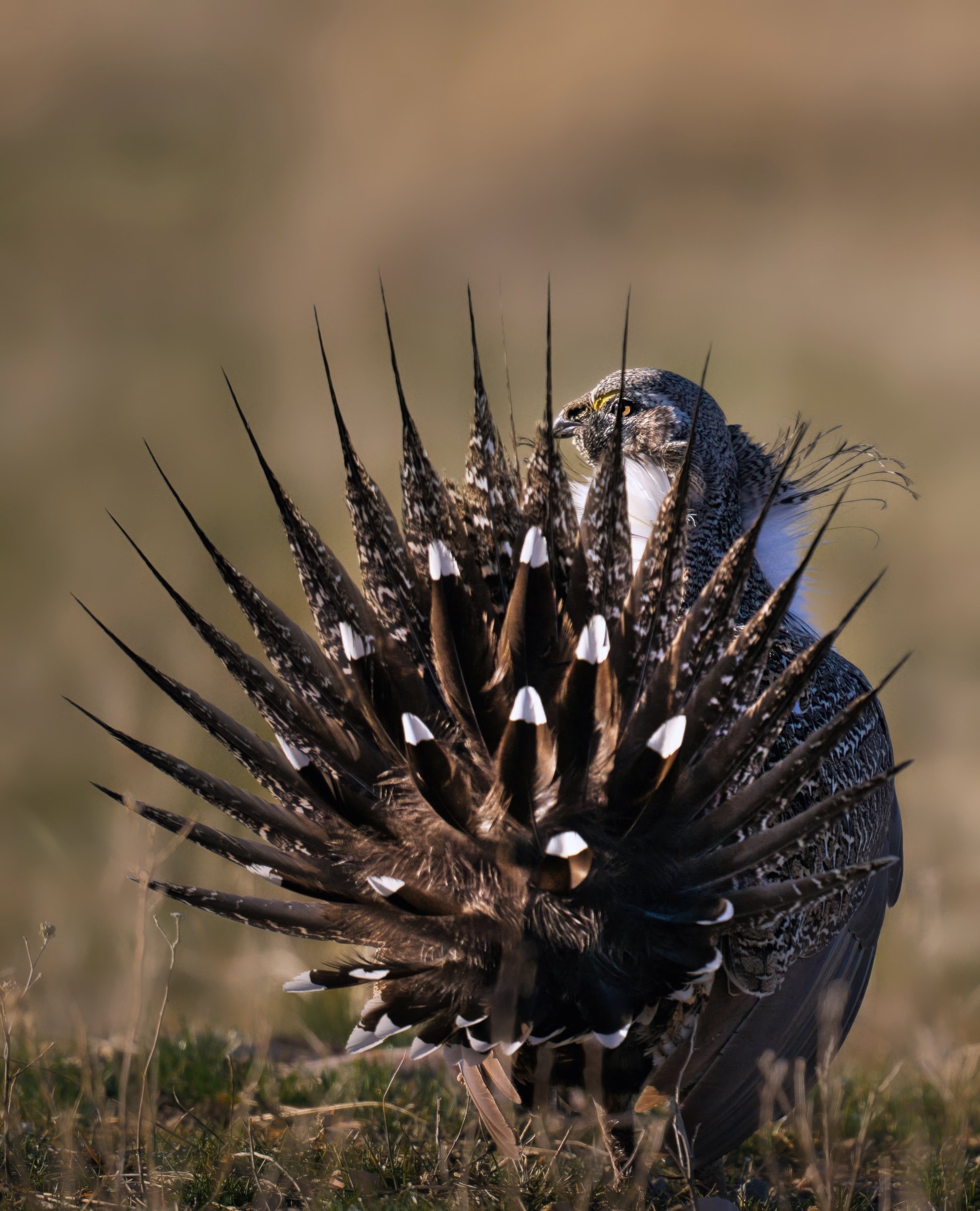
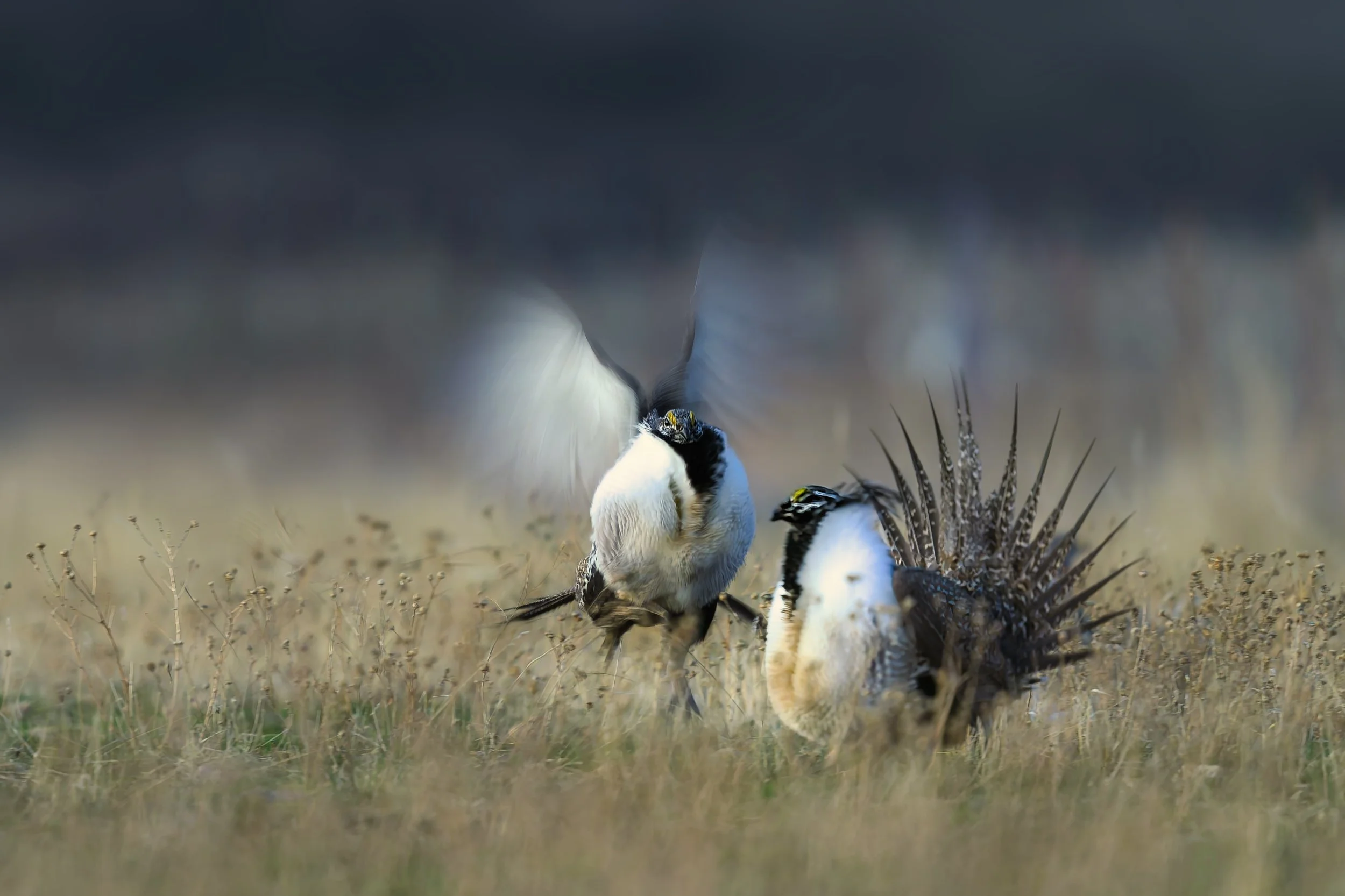
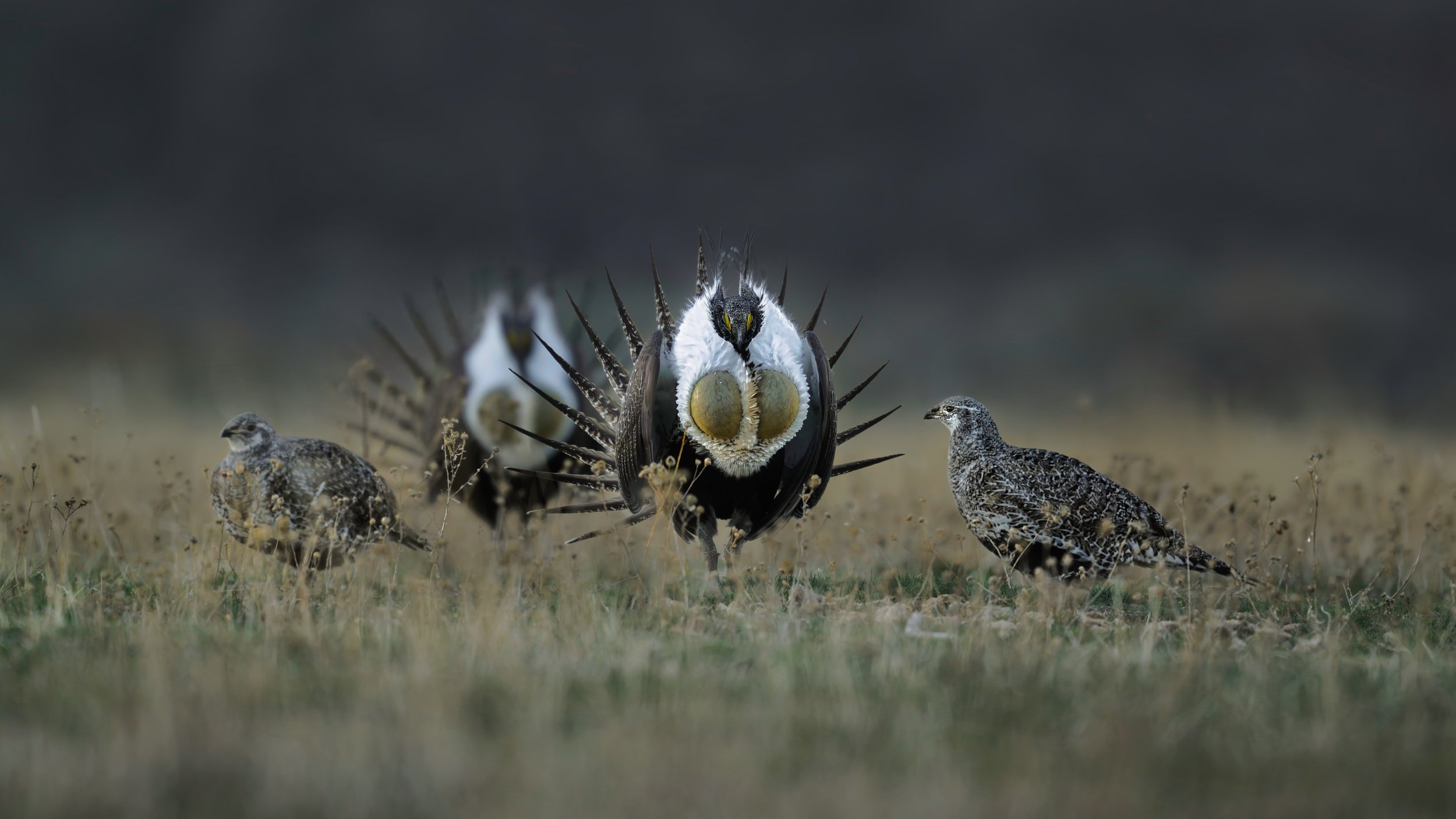
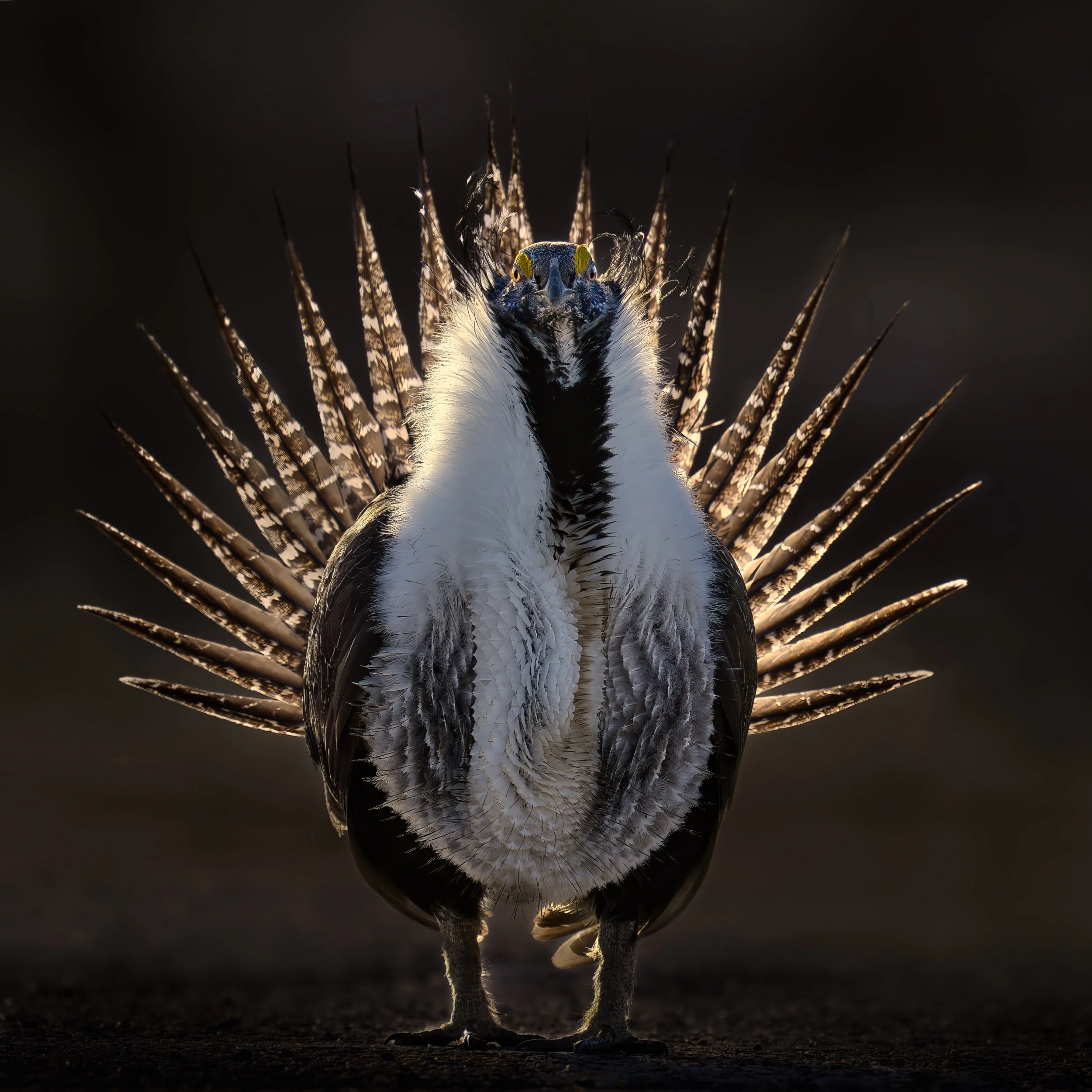
Once the males get on the lek, these avian troubadours attempt to attract females by engaging in an elaborate, highly coordinated song and dance. They fluff their white chest feathers into a massive ruff and fan their spiked tails into a dramatic starburst. Simultaneously, they inflate bright yellow, bulbous throat sacs and thrust their heads upward. This rapid inflation forces out air to produce a bizarre, mechanical acoustic display of plops, pops, and whistles that can echo for up to two miles across the quiet sagebrush sea. Amidst this chaotic spectacle, discerning females wait quietly on the sidelines, carefully evaluating the stamina and rhythm of the competing suitors before choosing a mate.